


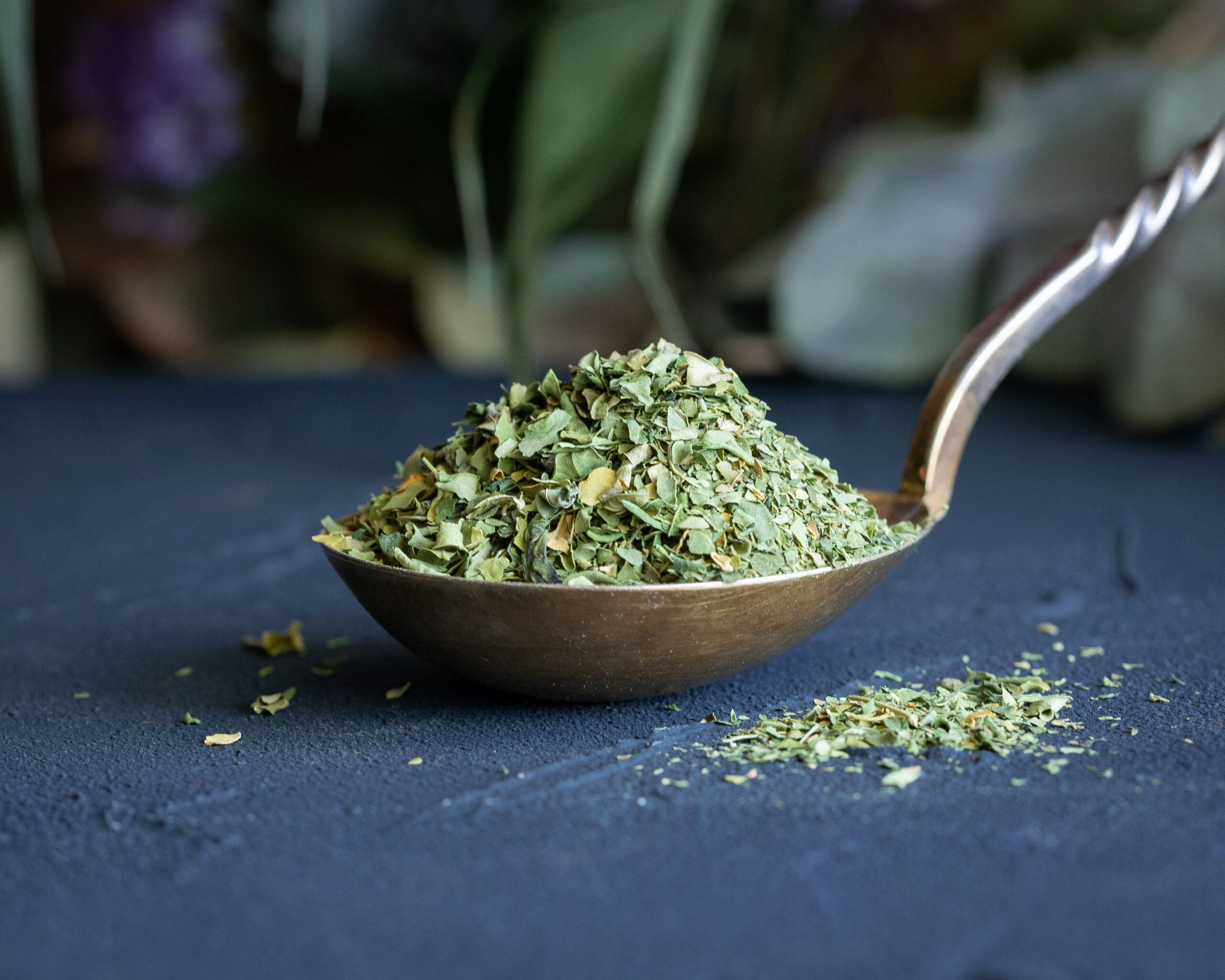

Organic moringa leaves (chopped)
From 2.80€
Moringa (Moringa oleifera), also known as the “miracle tree”, whose roots, stems, leaves, seed pods, resin and flowers have long been considered medicinal. Moringa is native to the Himalayan mountain region, especially in India, and later spread to Southwest Asia, Southwest and Northeast Africa, Madagascar, the Philippines and the USA.
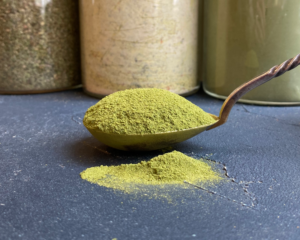
Both moringa powderand dried moringa leaves come from the same source, the Moringa oleifera tree, but differ in preparation, texture and use.
Moringa powder is made by drying fresh moringa leaves at low temperatures to preserve the nutrients. The dried leaves are then ground into a fine powder, thus preserving the nutrients.
Dried moringa leaves are obtained by drying the fresh leaves in the air until they become crisp and brittle. Like moringa powder, dried moringa leaves are rich in nutrients and contain essential vitamins and minerals. However, they may contain a slightly lower concentration of nutrients compared to the nutrient content of moringa powder.
In Ayurveda and other traditional medicine systems, moringa leaves have been used to alleviate various health conditions.
They contain essential vitamins including vitamin A, vitamin C, vitamin E and vitamin B. They are also rich in minerals such as calcium, zinc, iron, potassium and magnesium.
The nutrient content of moringa can provide a natural energy boost, fight fatigue and promote vitality.
Traditionally, crushed moringa leaves have been used to purify water because of their natural flocculant (coagulant) properties, which can help remove dirt and pathogens from water.
Caution
Women who are pregnant or breastfeeding, as well as people taking medication or with specific medical conditions, should not take moringa in large quantities.
As with any food, moderation is the key.
Moringa leaves have many health benefits and can have a positive effect on overall well-being. Moringa leaves’ excellent nutrient content and versatile use in a wide range of culinary preparations make them an affordable and convenient way to increase the value of a healthy diet.
Uses
Incorporating moringa leaves into a healthy diet. They can be added to a variety of dishes and drinks to increase their nutritional value.
Here are some ways:
Soups and stews – add chopped moringa leaves to soups or stews to increase their nutritional value.
Baked goods – add chopped moringa leaves to muffins, bread or pancakes.
Tea – brew chopped moringa leaves in hot water for a soothing and healthy herbal tea.
The recommended daily intake is 3-6 g (1-2 teaspoons).
Let food be your medicine!
Sources
www.webmd.com
www.mindbodygreen.com
NOTE. The information contained herein should not be construed as a recommendation for treatment or other health issues.
We encourage you to make personal decisions about your personal health, taking into account a wide range of sources of information.
Moringa leaves (moringa - folium) 100%. Certified organic.
Energy - 64 kcal
Protein - 9.4 g
Fat - 1.4 g
Carbohydrate - 8.28 g
Fibre - 2 g
Calcium - 185 mg
Magnesium - 42 mg
Iron - 4 mg
Phosphorus - 112 mg
Potassium - 337 mg
Sodium - 9 mg
Zinc - 0.6 mg
Vitamin C - 51.7 mg
Store in a cool, dry place.
You may also like…